


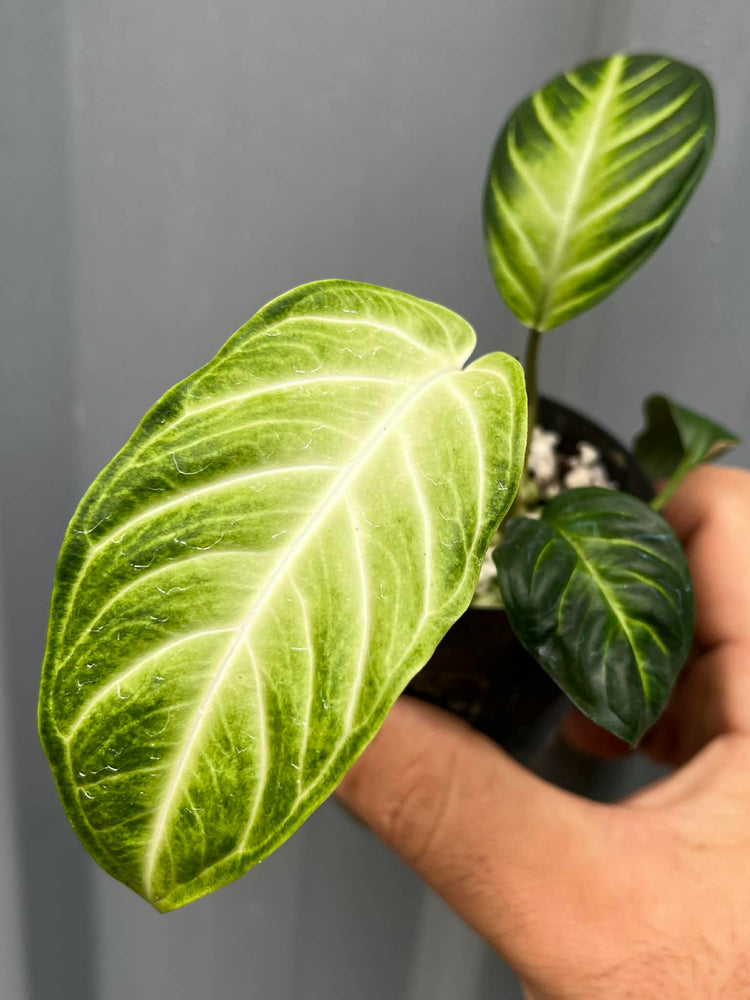
Phyllotaenium lindenii 'Mint' 75mm Pot
- Regular price
-
$25.00 - Regular price
-
- Sale price
-
$25.00
-
Hurry, only 1 item left in stock!
Couldn't load pickup availability
Shipping information


Product Details
Welcome to Plant&Leaf and our range of family grown plants. The first photo serves as a representative display, showcasing the beauty of a mature plant. The second photo shows a sample plant from the current stock for sale.
All of our plants are grown outdoors in nature and are exposed to the natural elements. Sometimes this means a leaf could have been chewed here and there or have a blemish or two – but we do our best to send the best plants we can on every order.
Phyllotaenium care (general growing guide)
Phyllotaenium is an aroid genus (many plants were previously sold as Caladium), so their care is very similar to tropical foliage plants like Philodendrons and Aglaonemas.
Light
- Bright indirect light is best
- Tolerates medium light, but growth slows
- Avoid harsh afternoon sun which can scorch leaves
Watering
- Keep the soil lightly moist but not soggy
- Water when the top 2–4 cm of soil dries out
- Don’t let it sit in water — they can rot if kept too wet
A good rule: slightly moist > constantly wet.
Soil
Use a chunky, well-draining aroid mix, for example:
- Indoor potting mix or coco peat
- Perlite or pumice
- Orchid bark/chunky bark
Example mix:
50% premium potting mix + 25% perlite + 25% bark
Humidity
- Prefers higher humidity (50%+)
- Will grow in normal indoor humidity but usually looks better with extra moisture in the air
Temperature
- Likes warmth: 18–30°C
- Protect from cold drafts and temperatures below ~12–15°C
Fertiliser
- Feed during active growth (spring/summer)
- Use a balanced liquid fertiliser at half strength every 2–4 weeks, or slow-release granules
Common problems
Yellow leaves
- Usually overwatering or poor drainage
Brown crispy edges
- Low humidity, underwatering, or fertiliser burn
Droopy leaves
- Often thirsty, but can also mean root issues from staying too wet